 Українська
 Русский
 English
Experts Weigh the Pros and Cons of Crypto Exchanges and Swap Services
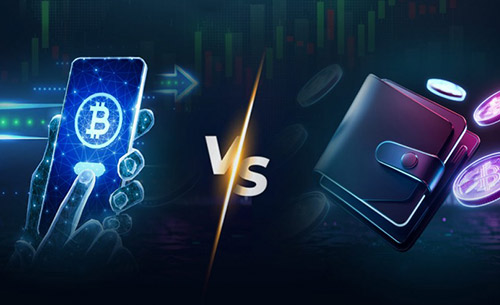
Amid the growing number of fraud cases in peer-to-peer (P2P) cryptocurrency trading, a recent article discussed what a crypto exchange service is and whether it’s worth using. It also compared the advantages and disadvantages of exchangers and centralized crypto exchanges.
Amid the growing number of fraud cases in peer-to-peer (P2P) cryptocurrency trading, a recent article discussed what a crypto exchange service is and whether it’s worth using. It also compared the advantages and disadvantages of exchangers and centralized crypto exchanges.
Today, two leading experts shared their opinions on this matter — Sean Yang, lead analyst at MEXC Research, and Jeff Ko, chief analyst of the global research department at CoinEx.
Sean Yang focused not so much on the ease of use of a given tool as on the risks, which continue to grow within the crypto industry.
“If you’re buying Bitcoin for the first time, for around 1,000 usd, a fast P2P exchange may seem attractive due to its simplicity and instant transaction. But it’s important to understand that this is a trade-off: you get speed, but you sacrifice security,” the analyst emphasized.
He also pointed out that a fully registered exchange with KYC takes more time for verification but provides operational transparency, fund protection, and access to a complete ecosystem of tools.
According to him, the balance between convenience and security lies where the amount and potential risks become significant. Even with a small amount, one should remember that an exchange protects against fraudsters, allows secure asset storage, and enables quick scalability of operations in the future.
Speaking of risks, Sean Yang noted that users of exchangers usually see only the rate and commission but overlook hidden threats.
First, there is a chance of receiving “dirty” cryptocurrency linked to money laundering.
Second, banks can block the user’s card or account if they detect suspicious activity — a frequent issue with insufficiently transparent P2P transactions.
KYC verification on exchanges minimizes these risks: your funds are linked to your verified identity, all transactions are transparent, and the exchange itself complies with AML/CFT requirements. This not only prevents account freezes but also provides legal protection in case of disputes.
As crypto users move beyond the beginner level, the use of exchangers becomes economically inefficient — transactions become regular, volumes increase, and users turn to advanced functions.
P2P and simple exchange services are suitable for one-time or small purchases but do not offer limit orders, staking, a wide range of trading pairs, or analytical tools.
From a functionality standpoint, the transition point to exchanges comes when a user wants to manage a portfolio, participate in yield products, or automate trading.
At this stage, the exchange becomes a tool that saves time and money while opening new opportunities unavailable through instant exchangers, the expert noted.
Recently, media outlets published reports claiming that MEXC lost solvency due to large fund withdrawals.
In response to concerns about the platform’s stability, Sean Yang urged users to consult official information on the exchange’s website and to verify data via trusted resources such as CoinMarketCap, CoinGecko, and DefiLlama.
He assured that MEXC’s financial position remains stable, and user funds are fully secured.
Jeff Ko, chief analyst of the global research department at CoinEx, sees advantages in both P2P and centralized exchanges.
For beginners, the security of funds and reliability of the platform should always be the top priority.
There’s no strict boundary between these two concepts — everything ultimately depends on user preferences and risk tolerance.
CoinEx, which launched its own P2P platform last year, aims to provide a secure and compliant environment while respecting user autonomy in legal P2P transactions.
As long as trades comply with KYC and AML rules and show no signs of abuse, the team avoids excessive control over user activity.
CoinEx representatives understand that the core value of decentralized finance lies in freedom and flexibility.
Excessive regulation of P2P activity could undermine the very principles that initially attracted users to cryptocurrency.
Jeff Ko noted that exchanges implement KYC systems and enhanced identity verification to ensure transaction transparency and fund safety.
In particular, CoinEx uses a deposit system to prevent misconduct and reduce risks related to informal or unregulated trading channels.
The analyst added that crypto users should remain vigilant, especially when performing off-platform or non-standard operations, which could expose them to compliance or security issues.
It’s widely believed that over time, newcomers find it inconvenient to keep using exchangers.
Jeff Ko believes there’s no single turning point — it all depends on trading frequency, transaction size, and the need for advanced tools.
For example, high-frequency traders or those who need fast entry and exit benefit from efficient order-matching mechanisms and high liquidity, which reduce slippage and latency and lower costs.
Exchanges offer features such as limit orders, staking, and portfolio tools, which are often unavailable through P2P or on-chain transactions.
“Of course, fees are part of the equation, but asset security must remain the top priority.
For users who value security, speed, and access to advanced tools, the value of using an exchange is undeniable,” Jeff Ko concluded.
Editor: Yulia Krasnaya