 Українська
 Русский
 English
U.S. National Debt Hits $38 Trillion: Will Bitcoin Become the Best Hedge Against Dollar Devaluation in 2025?
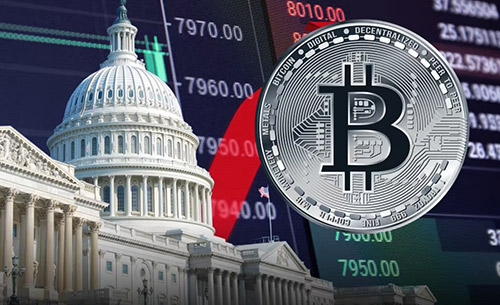
As of October 2025, the U.S. national debt has surpassed $38 trillion, marking the fastest $1 trillion increase in government borrowing outside the COVID-19 pandemic period. While investors are trying to assess how this will impact the long-term stability of the U.S. dollar, attention is once again shifting toward Bitcoin and other alternative assets that promise protection against dollar devaluation and inflation.
As of October 2025, the U.S. national debt has surpassed $38 trillion, marking the fastest $1 trillion increase in government borrowing outside the COVID-19 pandemic period.
While investors are trying to assess how this will impact the long-term stability of the U.S. dollar, attention is once again shifting toward Bitcoin and other alternative assets that promise protection against dollar devaluation and inflation.
Could 2025 finally be the year when Bitcoin fulfills its role as the ultimate inflation hedge, or does its reputation as a store of value still rely more on hope than proven performance?
The U.S. Debt Crisis Deepens
The rapid accumulation of debt is likely driven by several factors: a persistent budget deficit, rising interest payments (partly due to higher Federal Reserve rates), an aging population, and increased spending on defense and social programs.
According to the Peter G. Peterson Foundation, annual interest payments have exceeded $880 billion, and are projected to reach $1.8 trillion by 2035.
Economists warn that the U.S. debt-to-GDP ratio, now nearing 124%, is on a dangerous trajectory. While such levels have existed during wartime, today’s situation lacks the economic boom that typically follows large-scale government spending.
U.S. National Debt by Year
| Year | Approx. Debt | Main Driver(s) |
|---|---|---|
| 2021 | $28.42 trillion | COVID-19 relief spending |
| 2022 | $30.93 trillion | Inflation Reduction Act |
| 2023 | $33.17 trillion | Higher borrowing costs due to rate hikes |
| 2024 | $35.46 trillion | U.S. credit rating downgrade |
| 2025 | $38.00 trillion | Record spending pace, aging population, defense budgets, high borrowing costs |
$38 Trillion Debt Fuels Dollar Devaluation Fears
When government debt grows faster than GDP, it often leads to monetary expansion — effectively, printing more dollars to cover deficits. Over time, this erodes the currency’s purchasing power.
Although inflation in 2025 remains moderate compared to its 2022 peaks, core inflation still exceeds 3% (above the Federal Reserve’s 2% target), and real wage growth is stagnating. The main concern today isn’t a sudden inflation spike but the slow and steady erosion of the dollar’s value, as an increasing share of tax revenue goes toward interest payments.
As a result, investors are once again seeking safe-haven assets like Bitcoin, gold, and Treasury bonds, aiming to preserve purchasing power amid fiscal uncertainty.
Bitcoin’s Scarcity: A Key Hedge Against Monetary Expansion
Bitcoin’s main appeal lies in its fixed supply of 21 million coins, making it immune to monetary dilution through money printing.
Supporters argue that this scarcity makes BTC a powerful store of value, especially when governments are forced to issue more currency.
Historically, Bitcoin’s price has reacted positively to increased liquidity:
- After COVID-era stimulus in 2020, BTC surged from $9,000 to over $60,000 by 2021.
- Conversely, during rate hikes in 2022–2023, both Bitcoin and equities plunged.
This pattern defines Bitcoin as a liquidity-sensitive asset: it performs well when money flows are abundant and inflation expectations are rising, but struggles under tight monetary conditions when risk assets sell off.
In essence, Bitcoin is an effective hedge against currency debasement, but only when liquidity remains ample.
Institutional Adoption Through ETFs Strengthens Bitcoin’s Legitimacy
In 2025, alongside the surging U.S. debt, growing interest from major financial institutions has significantly boosted Bitcoin’s legitimacy as a global asset.
Recent examples include:
- T. Rowe Price, managing $1.77 trillion in assets, filed for an actively managed crypto ETF.
- VanEck and BlackRock launched spot Bitcoin ETFs, attracting billions of dollars within weeks.
- VanEck also submitted an application for an Ethereum Staking ETF tied to Lido’s stETH, providing regulated access to liquid staking tokens.
Currently, more than 155 crypto ETF applications are pending approval by the U.S. Securities and Exchange Commission (SEC). Their expected approval — particularly for spot Bitcoin funds — is transforming Bitcoin from a niche retail asset into a mainstream institutional class, much like gold two decades ago when it gained ETF representation.
Skeptics: Bitcoin Still Not a True Hedge
Critics, including Peter Schiff and Nouriel Roubini, argue that Bitcoin continues to behave more like a high-beta tech asset, closely tracking Nasdaq movements rather than gold.
They point out that Bitcoin’s volatility undermines its role as a reliable store of value. The recent $700 million in crypto liquidations further shows that speculative trading still dominates market activity.
Meanwhile, despite ballooning debt, the U.S. Dollar Index (DXY) remains strong — suggesting global confidence in U.S. Treasuries and dollar liquidity has not yet eroded.
Outlook: U.S. Debt and Fed Policy Will Define Bitcoin’s Path
Bitcoin’s trajectory through the remainder of 2025 will largely depend on three key variables:
-
The scale of additional U.S. borrowing,
-
The Federal Reserve’s stance on interest rates, and
-
Investor appetite for risk.
If the cost of debt forces the Fed to inject liquidity back into the economy, BTC prices could rise sharply.
However, if tight monetary policy persists, the crypto market may continue to cool.
Despite short-term uncertainty, Bitcoin’s core thesis — that it protects wealth when governments print too much money — is becoming increasingly persuasive.
With the U.S. now burdened by $38 trillion in debt, this issue goes far beyond fiscal overspending. It exposes a systemic flaw in a debt-driven financial model, pushing both individuals and institutions to seek alternatives to the dollar.
For those willing to embrace volatility and risk, Bitcoin may serve as a potential insurance policy against the declining value of fiat currency.
Editor: Pereyidenko Ihor