 Українська
 Русский
 English
What Is a Node and How Does It Work in Blockchain
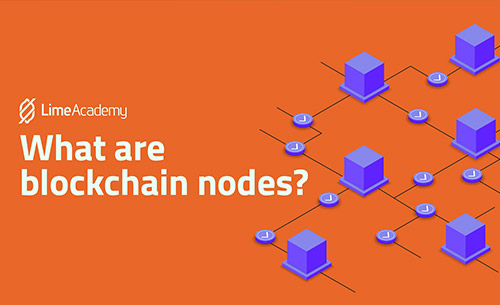
Blockchain inherits basic networking logic but enhances it with a key property — decentralization. In this system, nodes are not just data transfer points but active participants that store a copy of the distributed ledger and help verify its integrity.
Blockchain inherits basic networking logic but enhances it with a key property — decentralization. In this system, nodes are not just data transfer points but active participants that store a copy of the distributed ledger and help verify its integrity.
It’s important to understand that nodes are not an abstract concept, but physical devices running specialized software. They form the backbone of the blockchain, ensuring independence from central servers and resilience to failures.
The term “node” comes from the English node, which traces back to the Latin nodus — “knot.” In Russian (and Ukrainian), translations like “noda,” “узел/вузол” (knot, unit), or “network node” exist. In blockchain circles, “node” (or “нода”) has become standard as a direct borrowing, emphasizing the specificity of these networks and avoiding ambiguity.
Role of Nodes in the Ecosystem
Nodes keep the blockchain functioning properly. Their main tasks include:
-
Maintaining consensus. Every transaction and block must be validated by multiple nodes before being added to the chain, ensuring agreement on the ledger state.
-
Storing history. Full nodes keep a complete copy of all transactions, guaranteeing data persistence regardless of individual participants’ actions.
-
Synchronization and propagation. Nodes act as relays: new blocks and transactions are instantly distributed across the network.
-
Defense against attacks. A large number of independent nodes makes the blockchain resistant to censorship and data tampering, since an attacker would need to control the majority of the network.
Thus, nodes serve as the “skeleton” of the blockchain ecosystem: without them, a distributed ledger cannot exist.
Types of Nodes
-
Full vs. Light Nodes.
-
Full Nodes store the entire blockchain and independently validate all transactions and blocks. They are the foundation of decentralization.
-
Light Nodes (SPV Nodes — Simplified Payment Verification) only keep block headers and rely on full nodes for transaction verification. They require fewer resources, making them suitable for mobile and embedded devices.
-
-
Online vs. Offline Nodes.
-
Online nodes are constantly synchronized with the network.
-
Offline nodes connect periodically, downloading the latest ledger version.
-
-
Specialized Nodes.
Different blockchains may introduce custom types, such as:-
Masternodes (Dash), which enable instant transactions and governance;
-
Archive Nodes;
-
Mining Nodes;
-
Authority Nodes.
-
This classification highlights blockchain’s architectural flexibility: different node types balance security, speed, and accessibility.
Running a Node
Running your own node is a way to directly participate in a blockchain. This requires installing the appropriate software, downloading the current ledger, and maintaining a stable internet connection.
Full nodes are resource-intensive: hundreds of gigabytes or even terabytes of storage plus high bandwidth.
Example: Bitcoin Core, which functions as both a full node and a wallet, requires hundreds of gigabytes of free disk space. Light nodes are less demanding but more dependent on full nodes.
Conclusion
Nodes are a fundamental element of blockchain — without them, it cannot exist. They store, transmit, and verify information, maintain consensus, and protect the system from attacks. The diversity of node types reflects the flexibility and broad potential of blockchain technology.
Editor: Alyona Nabok