 Українська
 Русский
 English
How Much Does It Cost to Mine Bitcoin: Mining Profitability in 2026
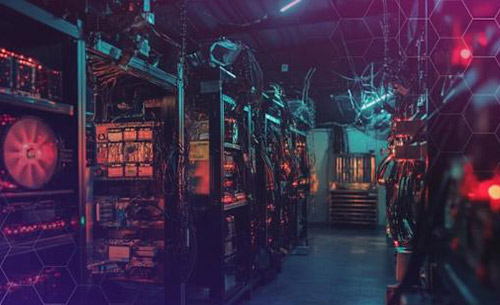
Despite the development of alternative consensus algorithms and the regular discussions about the “inefficiency of mining” as a phenomenon, this field of activity retains the status of a full-fledged industry that continues to attract new participants.
The Meaning of Mining
Despite the development of alternative consensus algorithms and the regular discussions about the “inefficiency of mining” as a phenomenon, this field of activity retains the status of a full-fledged industry that continues to attract new participants.
Technically, BTC mining is the process of producing (issuing) new coins by creating new blocks in the Bitcoin blockchain and adding new transactions to it. In Bitcoin, miners calculate the hash of a block header using the SHA-256 algorithm, utilizing their computational power. In other words, from an economic perspective, the essence of mining lies in the fact that participants must incur real costs: purchase expensive equipment such as ASICs, spend money on maintenance and hosting, electricity, and so on. This distinguishes the Proof-of-Work (PoW) consensus algorithm from, for example, the Proof-of-Stake (PoS) algorithm used by Ethereum.
The importance of mining has repeatedly been emphasized by the creator of the PoW mechanism, cypherpunk, co-founder and CEO of Blockstream, Adam Back. He has stated that PoS contains “fundamental problems” and reproduces the “worst traits of fiat (government) money” — unlike PoW.
PoS developers are aware of economic problems, in particular the “Nothing at Stake” issue, and even implement solutions such as slashing (economic penalties). Nevertheless, it is Bitcoin, with its mining, that remains the largest cryptocurrency by market capitalization. The total network hashrate sets new records year after year. In September 2025, it reached an all-time high, exceeding 1.3 ZH/s (zettahashes). On the other hand, in January 2026 the total hashrate dropped almost by half, to 725 EH/s. But why has the hashrate varied so dramatically in recent months, and what factors influence it?
What Miners Earn Now
In April 2024, at block height 840,000, the fourth Bitcoin halving took place, as a result of which the block reward was reduced from 6.25 to 3.125 BTC. These 3.125 bitcoins became the fixed portion of miners’ income (excluding fees) until approximately April 2028. Given that, on average, a new block is generated every 10 minutes, about 144 blocks appear on the network per day, or roughly 450 new BTC daily.
Although 450 bitcoins represent a massive economic incentive, transaction fees should not be underestimated. They play a significant role in miners’ activity. For example, following the halving in the spring of 2024, abnormally high fees were recorded on the network, reaching up to $128 per transaction — against the backdrop of the launch of the Runes protocol. On April 20, the day Runes was launched, more than 70% of all transactions across the entire blockchain were related specifically to this protocol, overloading the mempool. During a short period of time, the total transaction costs borne by users, and consequently miners’ fee income, exceeded the block reward itself.
The total Bitcoin hashrate is extremely dynamic also because miners’ revenues are unstable. Interestingly, at the beginning of 2026, the fee situation developed in the opposite direction — amid a decline in the BTC price, transaction costs also fell, with the average fee amounting to around $0.5.

Source: bitinfocharts.com
At the same time, as of the end of January, it is not uncommon for total transaction fees per block to amount to less than 0.025 BTC, meaning that the miner’s total reward in such cases does not exceed 3.15 BTC.

Source: mempool.space
Additionally, if we compare the Bitcoin price in January 2026 with the historical peak of October 2025 (above $126,000), over this period the price has lost more than 30%.

Source: tradingview.com
In short, the decline in the total hashrate at the beginning of 2026 is caused by at least two factors: a drop in the price of the leading cryptocurrency and low transaction fees on the network. Against this background, miners often prefer to shut down their equipment or redirect computing power to other uses (for example, to the needs of neural networks).
Naturally, this affects changes in the network difficulty, which currently roughly corresponds to the level of September 2025. Since October, in six out of eight difficulty adjustment periods, the difficulty has decreased, including two consecutive decreases since the beginning of the current year, 2026.
The bulk of Bitcoin’s total hashrate is concentrated in the largest mining pools. At the beginning of the year, Foundry USA leads among them with 23.35%, followed by AntPool with 21.26%, and ViaBTC closes the top three with 11.08%. Overall, the current distribution of hashrate looks as follows:

Source: hashrateindex.com/hashrate/pools
Electricity and Mining Equipment
As for hardware, at the beginning of 2026 one of the most popular ASIC models on the market remains the Bitmain Antminer S21 and its variants. This year, the industry is expected to be replenished with new products — starting in March, shipments are expected for Bitmain’s flagship device, the S23 Hyd, which operates with liquid cooling (580 TH/s with power consumption of 5510 W).
Among competitors, it is worth mentioning the Avalon Miner A16XP-300T model (300 TH/s with power consumption of 3850 W) by Canaan. Although it was presented back in the fall of 2025 (and initial shipments began then), it is currently listed on the manufacturer’s official website as scheduled for delivery in the second quarter of 2026. It is worth noting that, according to specifications, this model is not as efficient as Bitmain’s flagship solution. On the other hand, if one examines delivery prices on official websites, it becomes apparent that Canaan’s device costs more than twice as little.
The final market price of equipment can differ significantly from the prices set by manufacturers. At the same time, the practice of purchasing used equipment remains popular. In some cases, this allows miners to acquire an ASIC at a price many times lower than that of a comparable new device.
Naturally, any equipment, whether new or used, requires electricity, the cost of which must also be taken into account. If one looks at global statistics, electricity prices between, for example, Paraguay and Ireland differ by more than tenfold (in favor of Paraguay). The global electricity cost map as of 2026 looks as follows:

Source: worldpopulationreview.com
Electricity prices may also vary depending on the region within a specific country. For example, despite relatively high prices in the United States overall, electricity costs for industry are lower in the state of Texas, which allows companies such as Marathon Digital (MARA) to place their computing facilities there.
So, taking all this data into account, is it possible to calculate the cost of mining one bitcoin in 2026?
Problems of Calculating the Cost of BTC Mining
Unfortunately, it is impossible to clearly estimate all costs using a fixed universal amount that would be fair worldwide. At best, one can attempt to take into account the factors influencing the cost of mining one bitcoin and estimate expenses with a significant margin of error. Summarizing everything, here is what the cost of mining currently depends on:
Network difficulty level. The higher the difficulty, the greater the costs a miner must bear (possess greater computational power) to increase their chances of receiving a block reward. Although difficulty is currently declining, the drop in total hashrate in January indicates that for many, BTC mining is not particularly economically attractive.
Transaction fees. The block reward remains a fixed and predictable part of the reward, but increased fees due to a growing number of transactions on the blockchain allow miners to increase their income. In January, as mentioned above, fees remain at a fairly low level.
Bitcoin price. The most significant factor, without a doubt, remains the market price of BTC, since miners strive to sell the cryptocurrency at a profit. It is not surprising that during a rising market, mining becomes more profitable, while during a declining market it may force miners to operate at a loss.
Electricity costs. Everything depends on the miner’s location. The cost of electricity can vary drastically, and to estimate income and payback, it is recommended to calculate everything using specialized mining calculator services such as Whattomine. Since ASICs operate not with a single specific cryptocurrency but with a hashing algorithm, using certain calculators allows timely reconfiguration of equipment in favor of a more profitable coin, for example switching from Bitcoin (BTC) to Bitcoin Cash (BCH), due to the shared SHA-256 algorithm.
Cost of ASIC hardware. Every miner, in a certain sense, invests and risks their own money when starting Bitcoin mining. Even after calculating expenses and ensuring that they can recoup their costs within a reasonable timeframe through mining, there are no guarantees that by that time the BTC price will not collapse or that new, more efficient ASICs will not appear on the market, increasing total hashrate and network difficulty. At the same time, the price of an ASIC represents an immediate loss for the miner.
Associated expenses. In addition to purchasing ASIC hardware, it must be housed somewhere, maintained, and upgraded in a timely manner. There are also taxes, salaries (in the case of industrial mining), pool fees, and other expenses, all of which are costs that affect the price of bitcoin.
It seems that with such a multitude of variables, calculating the cost of mining one bitcoin even approximately is impossible. Or is it still possible?
How Much Does It Cost to Mine Bitcoin in 2026
Some researchers attempt to calculate the cost of mining one BTC coin, although often without disclosing the methodology in detail. Specialists from the CCAF research center at the University of Cambridge (The Cambridge Centre for Alternative Finance) have stood out in this regard. They proposed a special index that depends on the average electricity price. Information about the methodology is publicly available on the official website of the research center.
According to these data, as well as data from the U.S. Energy Information Administration (EIA), mining one bitcoin in the United States costs on average approximately $94,746, which, with a BTC price below $90,000, makes the activity unprofitable.
It should be noted that the United States leads in bitcoin mining, and the figure above represents a broad average. That is, the cost includes electricity prices across all sectors, both residential and commercial. If, however, one considers the average industrial electricity price in the United States, the cost of mining one bitcoin becomes significantly lower and amounts to $86,931.
One could, of course, take into account extremely low electricity prices in other countries, such as Paraguay. In that case, the cost of mining would be lower. However, most of the hashrate produced on the Bitcoin network is concentrated in the United States, and therefore, when calculating costs globally, prices in this country turn out to be more “benchmark-like.”
Incidentally, the decline in total hashrate in January 2026 was further intensified by record cold weather in the United States. The drop in hashrate affected the world’s largest mining pool, Foundry USA, most significantly.
Conclusion
Since the beginning of 2026, the mining industry has faced a number of challenges, including a decline in the BTC price, a decrease in transaction fees, and operational disruptions at the largest mining pool, Foundry USA. Against this background, the total hashrate on the Bitcoin network has decreased. At the same time, high competition within the industry and long-term positive expectations among miners lead people to actively spend money on equipment and electricity. As a result, according to some estimates, the cost of mining one bitcoin is at a level close to its market price.
Editor: Jerg Wos