Українська
 Русский
 English
US Crypto Bill Risks Getting Stuck Until Autumn
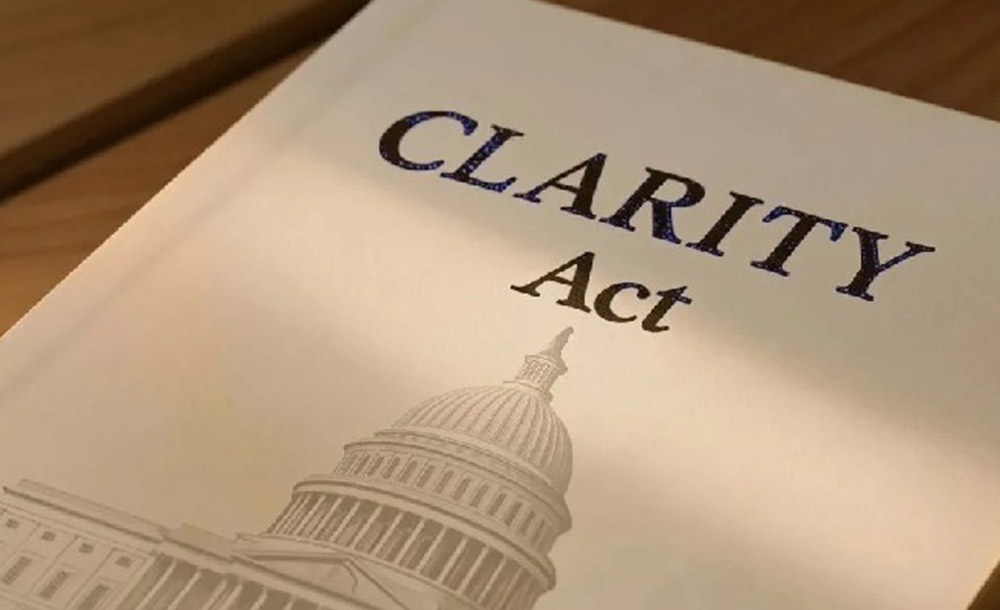
The chances of the CLARITY Act passing this year have fallen to 60%, according to Galaxy Digital. The previous estimate was higher, but Washington now has too little time left before the August recess.
For the crypto market, this document is important as the first full federal framework for digital assets in the United States. It is supposed to determine which tokens and companies fall under the SEC, and where the CFTC will take the leading role. But the political calendar, the dispute over stablecoins and demands for stronger controls on illicit finance are once again slowing the process.
There Is Almost No Time Left for a Deal
The document has already passed the banking committee of the upper chamber. On May 14, it was supported by 15 lawmakers, while 9 voted against it. After that, the market hoped the crypto industry would receive clear federal-level rules for the first time.
Now the main risk is not a complete collapse of support, but the calendar. There are few working days left before the August recess, and the text still has to pass several stages: securing 60 votes, surviving debates, amendments and reconciliation with another version of the document.
July is becoming the decisive month. If the leadership of the upper chamber does not allocate floor time for consideration in the coming weeks, the debate will almost certainly move to September. There, the bill will already face the election agenda and tougher political calculations.
Other Conflicts Have Filled the Agenda
Crypto regulation is competing for time with more urgent issues. In recent weeks, the Senate has spent part of its working time on other controversial topics: funding for ICE and the border service, as well as a separate administration fund. As a result, the crypto bill has less time left on the agenda.
Additional pressure was created by the failure of the procedure on the section concerning foreign intelligence surveillance. The vote ended 47 to 52, while the authority expires in 4 days. This forces lawmakers to urgently return to the issue against an already crowded schedule.
In such a situation, a complex crypto document can easily be postponed. Leadership will not spend scarce floor time unless it is confident that the votes have already been secured and the contentious points have been resolved.
The Main Disputes Remain Inside the Text
The document still has several sensitive points. Some Democrats are demanding the addition of provisions on ethics and conflicts of interest. Another group is pushing for stricter rules against money laundering, sanctions risks and illicit transfers. A separate task is to reconcile the different approaches of the committees working on market structure. Without this, the final version will not be able to move forward.
For the industry, the stakes are high. After many years of regulation through lawsuits and enforcement claims, businesses want to understand the rules of the game in advance. Exchanges, issuers and investors need clarity, but compromise in Washington is becoming more difficult with each passing week.
Stablecoins Have Become the Most Sensitive Point
The strongest conflict is centred on digital dollars. The banking lobby does not want crypto companies to be able to pay users yield for holding stablecoins.
Banks’ concern is understandable. If such tokens begin to function like yield-bearing accounts, some money may leave ordinary deposits. At the same time, platforms would not be subject to the full set of banking requirements.
A compromise version could ban passive payments simply for holding tokens, while allowing activity-based bonuses: payments, transfers, loyalty programmes and trading operations. This boundary has become one of the main lines of dispute.
Crypto Companies Do Not Want to Hand the Market to Banks
The industry believes that a strict ban on rewards would make digital dollars less attractive. For payment products, bonuses and incentives are often part of audience growth.
Banks respond that stablecoins should not turn into a substitute for deposits without the same obligations and oversight. The American Bankers Association has already promoted a survey claiming that consumers support protecting local lending and the financial system from interest-like payments on digital dollars.
As a result, the dispute has become broader than a single bill. Washington is effectively deciding what stablecoins will be: a fast payment tool or a competitor to bank accounts.
What Comes Next?
The bill’s chances could rise if three signals appear in early July: allocated floor time, a compromise on ethics and illicit finance, and an agreed text between the committees.
If that does not happen, consideration will almost certainly shift to autumn. The process would then be more heavily affected by elections, partisan conflict and the new congressional agenda.
For now, the bill is still alive, but its window is narrowing. The crypto industry has only a few weeks to see real progress. Without it, the first major regulatory framework for digital assets in the United States once again risks getting stuck in the political cycle.
See also: "Goldman Sachs Does Not See Rate Cuts in 2026, While Trump Sees No Reason for Higher Rates"