Українська
 Русский
 English
One Meeting, Two Narratives: How the US and China Described the Outcome of the Talks
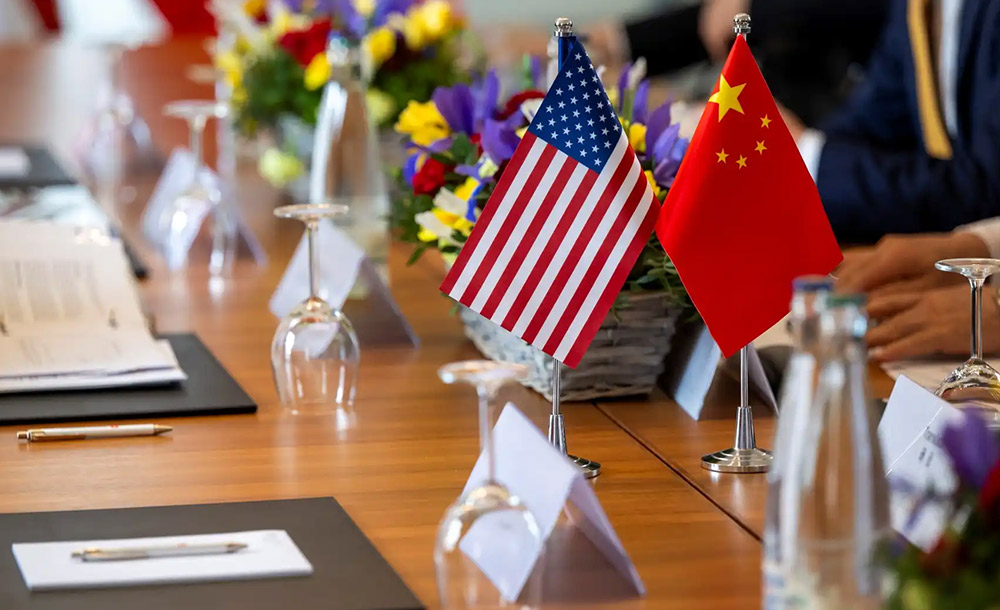
Trump visited China and returned to the United States with a substantial package of agreements — ranging from purchases of American grain to a shared position on Iran’s nuclear program.
The visit, which took place from May 13–15, 2026, concluded with a detailed White House statement and significantly more restrained comments from Beijing.
The two versions of the same event differ notably in their details.
What Washington Highlighted
The White House described the meeting between Donald Trump and Xi Jinping in terms of specific numbers and commitments.
According to the US statement, China agreed to several economic measures:
— purchasing 200 Boeing aircraft;
— buying at least $17 billion worth of US agricultural products annually from 2026 to 2028 in addition to existing soybean agreements;
— restoring access for American beef and poultry to the Chinese market, including the relisting of more than 400 companies.
The issue of rare earth elements and critical minerals was also specifically addressed — a highly sensitive matter for US industries dependent on Chinese exports.
The two sides additionally agreed to establish:
— a US-China Trade Council;
— a US-China Investment Council.
Geopolitical Outcomes of the Talks
Washington also reported consensus on three major geopolitical issues:
— Iran must not obtain nuclear weapons, and the Strait of Hormuz must remain open;
— denuclearization of North Korea remains a shared objective;
— unilateral tariffs imposed by individual countries or organizations are unacceptable.
Trump also invited Xi Jinping to Washington in autumn 2026.
Both countries pledged mutual support as hosts of future G20 and APEC summits.
What Beijing Said
Chinese state media and the Chinese Foreign Ministry described the same meetings in a fundamentally different tone.
Chinese official statements made no mention of:
— the $17 billion agricultural commitments;
— the purchase of 200 Boeing aircraft.
Instead, Beijing emphasized:
— “overall balanced and positive outcomes”;
— mutual benefit;
— equal consultations.
China confirmed the creation of the trade and investment councils, progress on agricultural market access, and a commitment to expanding bilateral trade through mutual tariff reductions.
The relationship between the two countries was also given a new official definition: “constructive strategic stable relations” (中美建设性战略稳定关系).
Xi Jinping described the visit as a step toward strengthening mutual understanding and trust between the peoples of both nations.
Geopolitical issues such as Iran, North Korea, and tariffs were either omitted from Chinese official materials or reduced to general statements about “enhancing communication on international and regional affairs.”
One Meeting, Two Different Narratives
The divergence is systemic in nature.
The United States framed the talks as a list of concrete concessions made by China — complete with figures, product categories, and company counts.
China, meanwhile, constructed a narrative centered on equality and mutual benefit while avoiding details that could appear as unilateral concessions.
This asymmetry reflects a standard diplomatic practice: each side primarily communicates outcomes to its own domestic audience.
The White House seeks to demonstrate a “victory” in negotiations with China, while Beijing emphasizes the partnership-based rather than subordinate nature of the agreements.
At the same time, both sides consistently confirmed the meeting itself, the new framing of bilateral relations, and the establishment of the two joint councils.
AI Perspective
Historical analysis suggests that asymmetrical communiqués between the United States and China are not unique to 2026.
The 1972 Shanghai Communiqué also contained intentionally ambiguous language designed to allow both Richard Nixon and Mao Zedong to present the agreement domestically as a diplomatic success.
More than fifty years later, the mechanism remains essentially the same — only the digital tools and speed of narrative distribution have changed.
At the same time, substantial risks remain beneath the surface.
Rare earth minerals, which both sides once again claim to be addressing, remain a potential source of future industrial disruption if these agreements ultimately remain confined to press releases rather than concrete implementation.
See also: "Strategy Shares Set Record Trading Volume of $1.53 Billion in a Single Day"