04/06/26 04:51 UTC-04
Cryptocurrency

Bitcoin Plunges Below $62,000, Ethereum Falls Below $1,800
On the night of 4 June 2026, the crypto market saw another downturn. Bitcoin briefly fell to $61,383, while Ethereum dropped to $1,717, according to TradingView.
04/05/26 08:58 UTC-04
Cryptocurrency

Bitcoin Surpasses $80,000 for the First Time Since January
Bitcoin broke above $80,000 on Monday, May 4, gaining 2.7% within three hours amid a rally in Asian equity markets. This marks the highest level since January 31, 2026.
01/04/26 05:26 UTC-04
Cryptocurrency

Bitcoin posted its worst first quarter since 2018
In the first quarter of 2026, the price of the leading cryptocurrency fell by 22.2%, marking its worst start in eight years.
03/06/26 08:26 UTC-04
Cryptocurrency

Last week, readers were informed about the renewed flow of funds into dollar-denominated alternatives such as Tether and USD Coin (USDC) amid Bitcoin’s decline from its early-May highs above $80,000. This combination of factors served as an early warning sign of a potential full-scale risk-off move across the cryptocurrency market.
03/06/26 08:15 UTC-04
Trading

Cardano continues to face significant pressure this week as weak market structure, declining derivatives activity, and uncertainty within the ecosystem have heavily weighed on market sentiment. ADA was trading near $0.216 after another failed recovery attempt, while traders monitored growing concerns surrounding the potential shutdown of the Cardano analytics platform TapTools.
03/06/26 06:45 UTC-04
Cryptocurrency

The $NEAR Protocol blockchain will implement post-quantum cryptography measures by the end of Q2 2026, meaning as early as this month. This was stated by the project’s co-founder Illia Polosukhin.
03/06/26 02:56 UTC-04
Cryptocurrency

Bitcoin dropped to its lowest level in more than two months on Wednesday, extending a sharp decline after the largest corporate holder of cryptocurrency — Strategy — sold part of its holdings, which the market interpreted as a bearish signal.
03/06/26 02:31 UTC-04
Cryptocurrency

The total crypto market capitalization has fallen sharply to $2.32 trillion. The decline has wiped out roughly 17% of the market value in less than three weeks.
03/06/26 02:28 UTC-04
Cryptocurrency
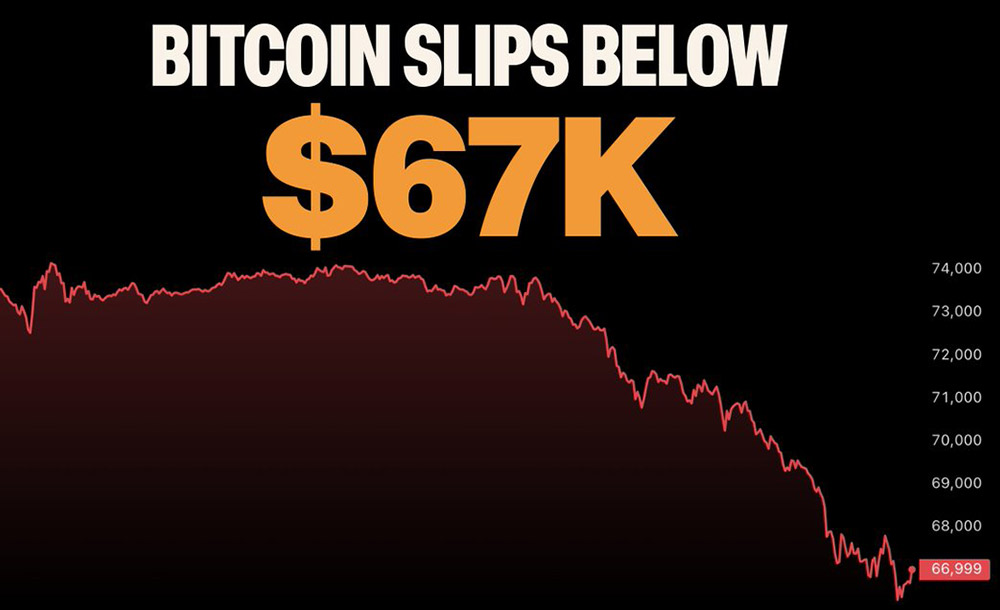
Bitcoin experienced a sharp decline in early June 2026, tumbling more than 6% in 24 hours to an intraday low of $66,948.
03/06/26 02:15 UTC-04
Trading

$XRP price extended losses and traded below $1.220. The price is now consolidating losses and faces hurdles near $1.2350 and $1.250.
02/06/26 14:21 UTC-04
Cryptocurrency

As investors’ expectations for a new short-term bullish trend in Bitcoin continue to weaken, the leading cryptocurrency BTC intensified negative market sentiment with its sharp decline over the past 24 hours.
02/06/26 09:39 UTC-04
Cryptocurrency

Bitcoin's price fell to its lowest level in two months as selling pressure accelerated and technical analysis highlighted a significant trend line — the 200-week Exponential Moving Average (EMA). According to TradingView data, Bitcoin dropped to $68,771 on the Bitstamp exchange.
02/06/26 08:48 UTC-04
Cryptocurrency

The price of Toncoin ($TON) surged after Pavel Durov announced plans to rename the blockchain's native cryptocurrency to Gram. Over the past 24 hours, the token climbed from $1.89 to $2.26, gaining 19.5%.
02/06/26 08:18 UTC-04
Cryptocurrency

The native token of Hyperliquid (HYPE) surged above $75 for the first time, extending one of the strongest rallies in the crypto market this year.
02/06/26 05:33 UTC-04
Cryptocurrency
Bitcoin dropped below the $70,000 mark for the first time in nearly two months amid concerns surrounding the conflict between the United States and Iran, as well as a rare Bitcoin sale by Strategy, according to Bloomberg.
02/06/26 03:26 UTC-04
ICO, ІРО, STO

Anthropic filed a draft S-1 registration statement with the U.S. Securities and Exchange Commission on June 1, 2026, marking the company's first official step toward a public listing. The exact number of shares and pricing range have not yet been determined. The final decision to proceed with the IPO will depend on market conditions.
02/06/26 02:46 UTC-04
Cryptocurrency
Bitcoin dropped to a two-month low on Tuesday, extending recent losses after the largest corporate cryptocurrency holder, Strategy, sold part of its Bitcoin holdings for the first time in nearly four years.
01/06/26 18:46 UTC-04
Cryptocurrency

Bitcoin dropped to a seven-week low as hopes for a ceasefire agreement between the United States and Iran began to fade, while oil prices surged sharply higher.
01/06/26 16:05 UTC-04
Cryptocurrency
XRP has fallen to its lowest level in more than three months as persistent selling pressure continues to outweigh signs of investor accumulation, creating a conflict between on-chain activity and market performance.
 Українська
 Русский
 English